Selected workCASE / DOE LPG

DoE LPG systems enhancement · Abu Dhabi · 2023–2025

Field work.
Structured data.
Traceable delivery.

A multi-year program to enhance LPG detection and control systems across Abu Dhabi. Delivery involved multiple sites and parties, with field checks, progress records, and acceptance documentation that needed to stay connected.

I supported project coordination and field execution, and developed documentation tools using Excel and Python. The aim was a repeatable path from site observations to documents that engineers could review.

Field delivery & project coordinationExcel / Python

FIELD RECORDAbu Dhabi, UAE
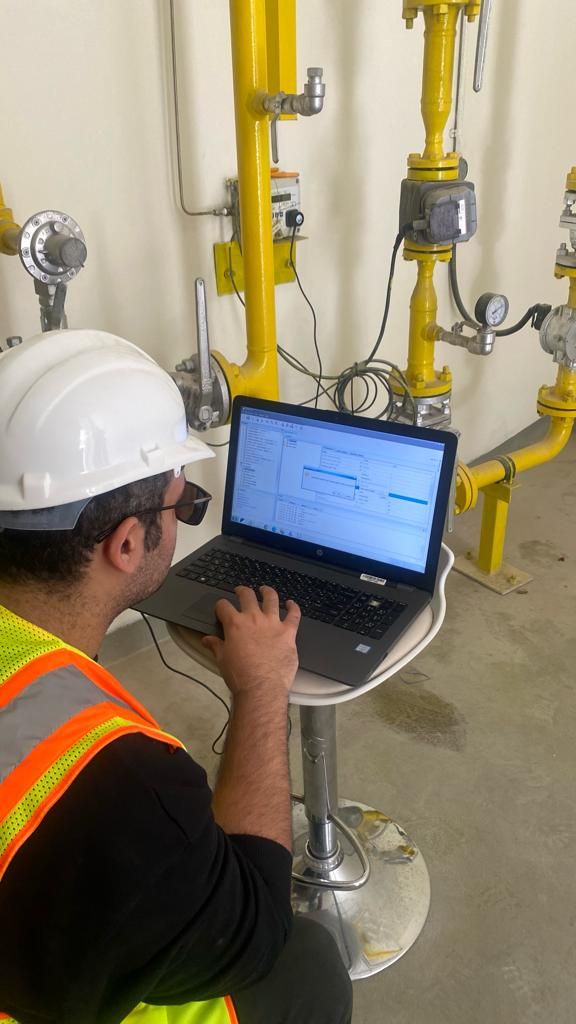
On-site engineer using a configuration laptop beside LPG pipework, valves, and gauges.
On-site commissioning. Working between the gas installation and its configuration laptop.

Two layers.
One delivery process.

The work had two closely related parts: coordinating the activities around the installation, and giving the resulting information a consistent structure.

Defined steps and prerequisites

Commissioning activities were organized around the gas control panels and associated safety systems.

  • Break activities into steps with clear preconditions.
  • Check dependencies such as power, signals, access, permits, and equipment.
  • Record checks and readings for use in the project documentation.

The purpose was to make site readiness and the next required action easier to establish.
Structured inputs and reusable templates

I developed internal tools to carry field and project information into repeatable document layouts.

  • Maintain progress and inspection records in structured Excel sheets.
  • Check entries and flag missing or inconsistent information.
  • Map records into report and certificate templates using Python.
  • Log processing results so exceptions could be reviewed.

Generated documents still required engineering review and the applicable acceptance process.

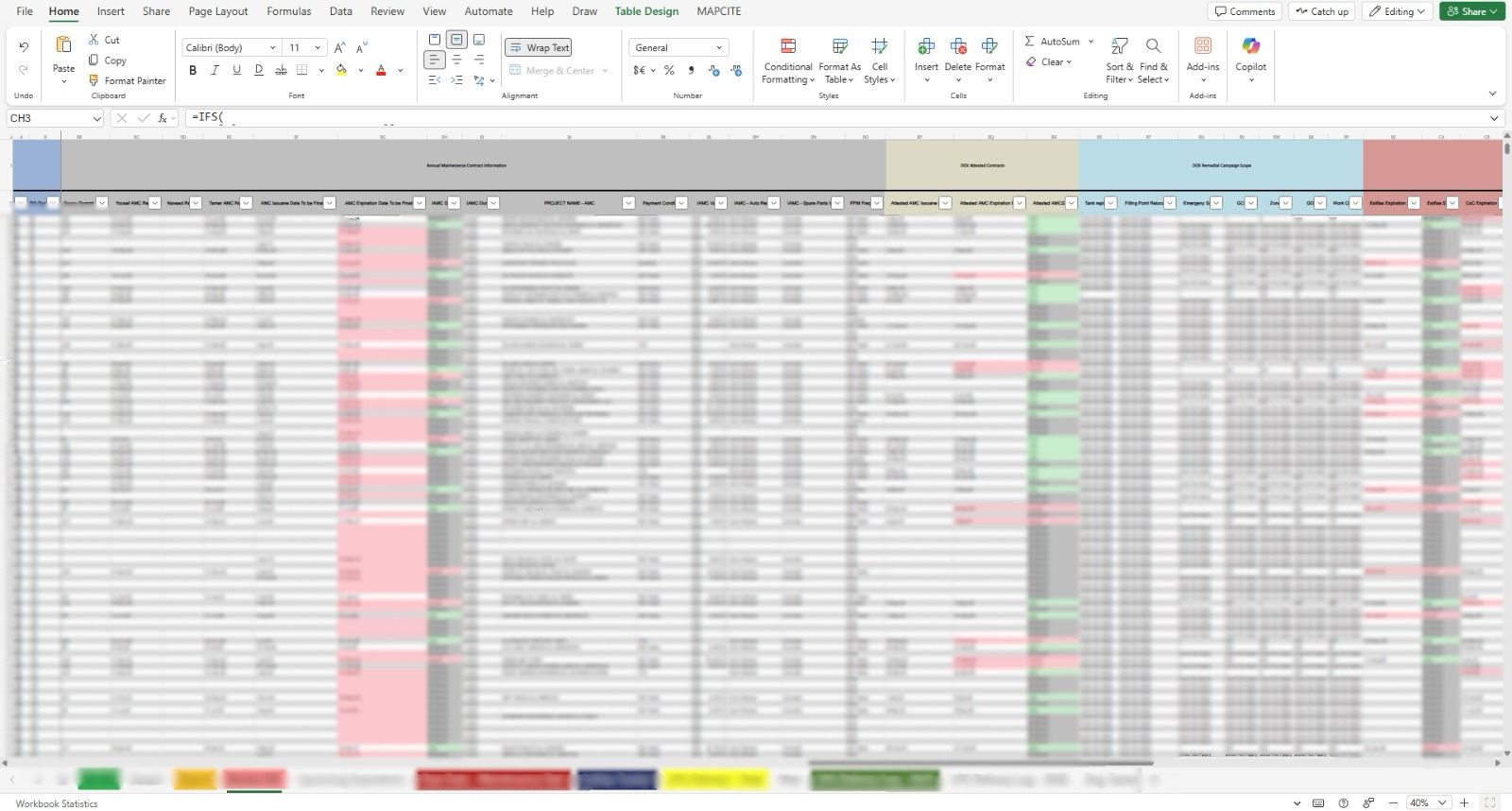
Excel project tracker with grouped columns for maintenance contracts, attested contracts, and remedial scope; individual records are blurred.
The input record. An existing project tracker with grouped fields and visible status formatting. The published image has record details blurred.

From structured input
to a reviewable record.

Excel supplied the structured records. Python checked and transformed the inputs, filled the templates, and recorded the outcome of each run.

DOCUMENT WORKFLOWExcel → Python → Review
  1. Collect site and project records

    Capture progress, inspection details, and the relevant reference fields in a consistent worksheet structure.

  2. Check the inputs

    Check required information, status consistency, and template placeholders. Flag entries or mappings that need correction.

  3. Map records to document templates

    Use the spreadsheet fields to fill predefined report and certificate layouts, keeping repeated formatting work in the templates.

  4. Generate and review

    Produce documents in batches and record processing results. Review the output and resolve exceptions before the documents enter the acceptance process.

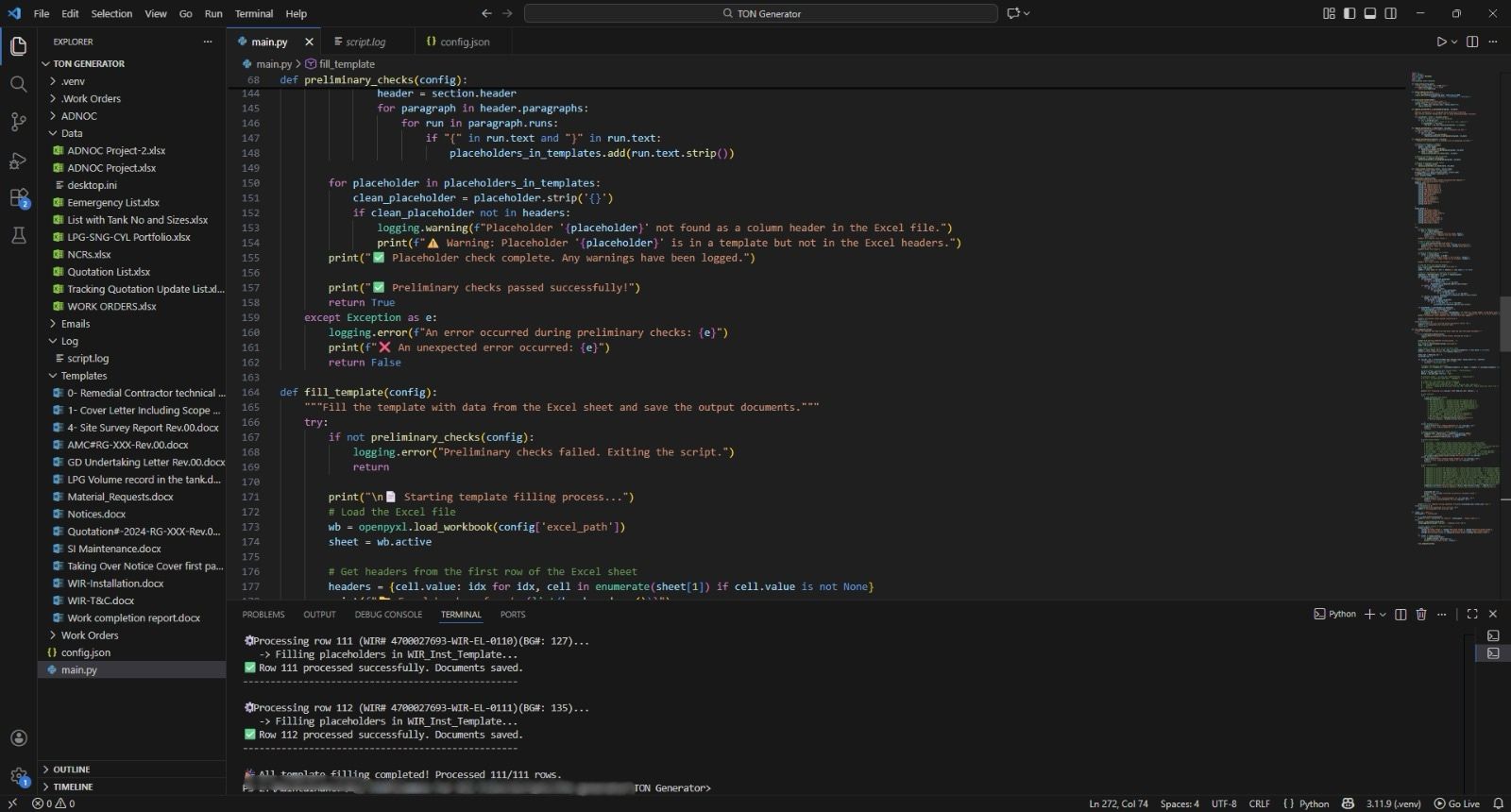
Python document-generator source in Visual Studio Code, showing template placeholder checks, an Excel workbook reader, and per-row processing messages.
The processing tool. The existing Python generator shows placeholder checks, template population, and a terminal log of processed rows. This is a development artifact from the workflow.

Automation supports the review. A generated document records the supplied information. Its technical content, required evidence, and approval still need to be checked by the responsible people.

“Complete” needs
a shared definition.

Different parties needed to understand the same site status. I used explicit progress states and named the outstanding conditions, so a partial activity could be discussed without presenting it as accepted work.

Work is underway

An activity has begun. Its remaining tasks and dependencies are still part of the progress record.

A condition remains open

Some prerequisites or tasks are complete. Record the outstanding condition and attach a next action.

Evidence supports the status

The applicable completion criteria have been met, with the required evidence and acceptance recorded.

Make blockers visible

A useful status explains what is stopping the next activity and who needs to act. That gives coordination meetings a specific issue to resolve.

Build the evidence during delivery

Maintain the execution record while the work is underway. Close-out can then focus on checking the available evidence and resolving gaps.

Make the next action clear.

Define progress before reporting it

Agree what each state means and what evidence supports it. Use those definitions consistently across the field team and project reviews.

Pair each blocker with an action

Identify the missing condition, the next step, and the responsible party. Visibility is useful when someone can act on it.

Keep templates separate from records

Reusable layouts and structured inputs make recurring documents easier to produce and inspect.

Retain the human review

Use software to reduce repeated data entry and expose exceptions. Keep engineering judgment, inspections, and authorized acceptance within the workflow.